The Cost of Unclear Expectations

I’m told that one quote preachers try to live by is, “If it’s foggy in the pulpit, it’s cloudy in the pew.” In other words, as the leader and communicator, if you’re unclear about any part of your message, it’s a sure bet everyone else is as well.

You don’t have to be a preacher to risk setting unclear expectations. If you’re responsible for performance outcomes of any kind, unclear expectations could be your biggest kryptonite. In fact, if the expectations you set are unclear, you force members of your team to work as much as three times as hard.

How Leaders Learn to Lead

The new three-part video series Jump-Start Your Employee Engagement has now launched. Join communication expert Josh Erickson and myself for three ideas in three days – all in four minutes or less. This video series will only be available for a limited time – click here to enroll.

How do people learn to be leaders?

That’s the question leadership consultant and thought leader Robert J. Thomas answered at a leadership academy event I recently helped organize. Speaking from his book Crucibles of Leadership, Thomas demonstrated that simply taking a course on leadership would do little to transform leadership abilities. In fact, knowledge plays only a small role in a leader’s effectiveness, despite the high price often invested in higher education.

Here is a sample of the elements that transform ordinary people into great leaders.

Don’t Sabotage Your Own Success

When you’re new to the workforce, enjoying leadership success can be a far off goal. The main focus is finding the right role and doing quality work. I know that was the case for me. But with time and experience (and a lot of hard work) come new opportunities to lead at higher levels. You go from joining a team to leading a team to eventually leading a department or major organizational function. Each time the strategy shifts.

A couple years ago I was privileged to have Mark Miller guest post on my site about surviving success. We all need a game plan to kick off a new opportunity. But our behavior needs an adjustment as well.

In his bestseller What Got You Here Won’t Get You There, executive coach Marshall Goldsmith shares twenty habits that can be largely overlooked at lower organizational levels, but have the potential to absolutely derail a senior leader who doesn’t change course. There isn’t room to share them all in this post, but I’d like to highlight five extra critical ones. Fail to implement them, and your best people may go looking for a new leader.

Man Stuck on Ladder

12 Books that Shaped My Leadership

For years I’ve been asked for book recommendations. I always take them seriously because I wouldn’t be the leader I am without my library. It’s been a huge part of my leadership education. As a senior in college, I started reading business bestsellers to see how they compared with my textbooks. When I joined the workforce, I quickly started noticing positive and negative organizational dynamics I had “seen” before in the books – and I knew what needed to change. Several years later I finally landed my first job in leadership development. I wouldn’t have gotten the opportunity without having my mind stretched by the books I’d read.

One of the things I’ve learned over the years is everyone has leadership development opportunities. You don’t need to be the boss or work in HR. And the right book at the right time can make an incredible difference.

If you’re looking for a leadership read, here’s a great place to start.

How to Deliver a Leadership Event that Sticks

I’m constantly surprised at what passes for “leadership training” these days. Then I remember that most leaders work in business operations and their involvement is often extracurricular. I’ve also noted how easily many business operators are impressed with the leadership development support that comes their way. It’s almost as if the simple fact that the organization is investing in them speaks louder than the concepts or structure.

Regardless, if you are going to invest in a leadership event, it’s an opportunity for excellence – whether you are an executive, manager or training expert. Don’t settle for mediocrity. Just having an event doesn’t guarantee success. Incorporate these best practices.

Where Have All the Good Leaders Gone?

If you’ve worked for any length of time, you’ve probably wondered, “Why is it so hard to find good leaders?” You’re not alone. Not only are employers finding it tricky to find qualified help, management & executive roles have become increasingly difficult to fill. These employers can only expect retirement to continue to raid the Baby Boomer portion of their leadership ranks. So who will step up to fill the leadership gap? More specifically, where should we look?

Everyone wants to work for a strong leader and to have dependable people supporting them. But it’s not a given. So if you’ve ever asked where all the good leaders have gone, it may be helpful to tweak your perspective.

Business Man Alone

12 Ways to Make Your Teammates Look Good

In the past, I’ve shared the value of being a “Kamerman teammate” – that is, going the extra mile to make your teammate look good. It’s a mindset shift for most of us, and a complete game-changer at that. I’d like to take this concept a step further and share some practical ways to get started. Over the course of my career thus far, I’ve found that these twelve strategies for extraordinary teamwork not only make your team stronger, they have the power to significantly influence the culture of your organization if others begin to follow your example.

Business Colleagues

Trusted Leadership Advisor – Free ebook!

Book 3D image v2I’m happy to announce that last week I posted my first ebook Trusted Leadership Advisor: Accelerating the Leadership Journey of Others.

You don’t have to be special to be a leader and you don’t have to be an expert to help other leaders succeed. You can start right now, right where you are.

Trusted Leadership Advisor is a compilation of some of my previous posts on this topic. In the ebook, I show you how to think about your role as a trusted leadership advisor, what to say and how to get started. Take a look – and if you find it helpful, please share it.

I’d also appreciate your feedback. This is my first ebook and I want to know if the format, structure and ideas prove to be helpful for you. You can leave me a comment below or contact me directly.

There’s so much work to do – let’s work together!

Is Leadership Easy or Difficult?

One of the things that disappoints me the most is hearing someone tell me they don’t want to be a leader. It’s unfortunate because I believe that everyone not only has the ability to be leader but also the responsibility to make a leadership contribution in the role they are in. But in this context, they usually associate leadership with a management-type position. And what they usually mean is that the perks of leadership (pay, perception, privileges) are not worth the stress (bureaucracy, pressure, time, work, people issues).

And unfortunately, in some cases, I agree with them. I’ve seen plenty of leaders abused to the point where others take note and stay put. Usually it’s the result of some type of organizational dysfunction which may be easy to see buy difficult to change. Other times the job really is that difficult.

So as you move up in an organization, does leadership get easier or harder? I have good news and bad news. The answer is “yes.” Here’s why.

Easy Way Hard Way

Great Leaders SERVE

I had the chance to travel to Greece and Bulgaria recently and give a series of leadership presentations to several university groups with a small team of business professionals. The sights, food and people were reward enough, but getting to share our leadership presentations with the future leaders of two countries added a special sense of purpose to the trip. Even better, our message had been carefully constructed to include leadership principles that have proved timeless across all disciplines. Let me tell you more about it.

Mark Miller developed the SERVE model and curriculum and collaborated with Ken Blanchard to publish it in their book The Secret. Each member of our small team presented a portion of the model. I’ll summarize it for you here below.

Waiter Serving Dish

The Fear of the Finger

I’m afraid I’ve come to recognize a serious leadership deficit today in America. It’s probably nothing new. It’s what I call “the fear of the finger.” Not the middle finger, mind you. I’m talking about the index finger. Precious few individuals are willing to risk being on the other end of a finger that could end up being pointed at them. Especially when it turns into many fingers in high profile situations.

In other words, there is a great reluctance to take a stand in ambiguous or unpopular situations and declare, “If this doesn’t work, I’ll be the one who goes down with the ship.”

The great tragedy is that the opportunity for true leadership, the kind that welcomes responsibility and takes courageous and necessary risks in spite of the unknown – that kind of leadership, has never been in higher demand. Worse still, the kind of leadership that takes a stand is exactly the prerequisite to rallying others to unite and follow.

Finger Pointing2

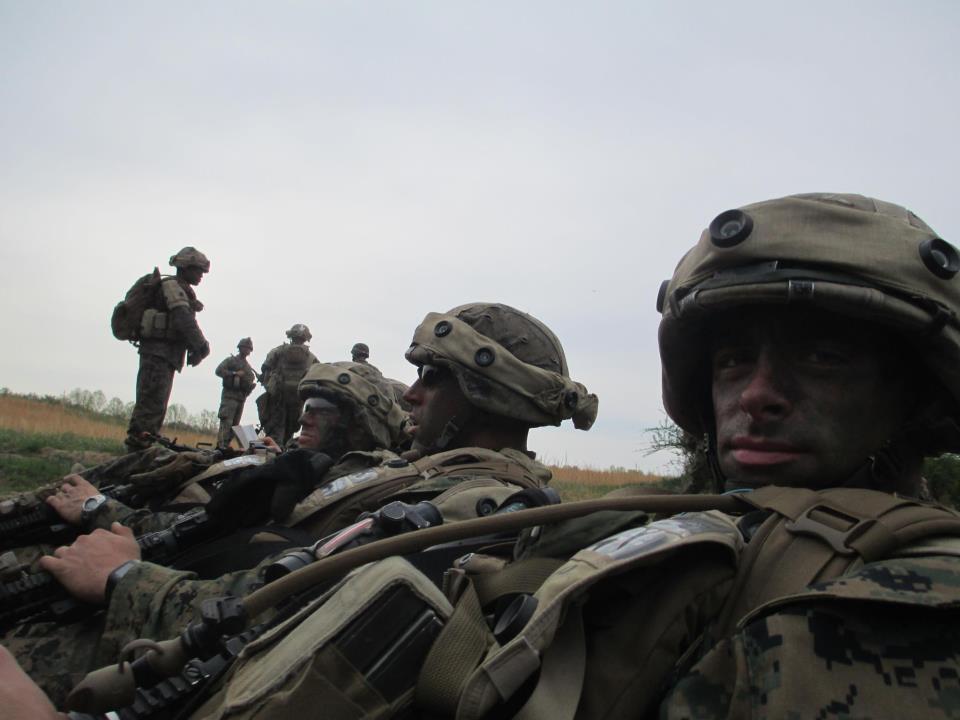
Love Your Neighbor: The Heart of Leadership in the Marine Corps

Today’s post was guest-written by my brother Lt. Cale Magnuson, a U.S. Marine   currently assigned to the Marines Aviation Program. You can connect with Cale on LinkedIn or Twitter. If you would like to be featured on this site, click here.

I distinctly remember the first time I ever heard Captain Tucker tell us that he loved us. Captain Tucker was the platoon commander charged with instilling in us the art and science of becoming Officers in the Marine Corps. As you might imagine, this raised some eyebrows. Captain Tucker is still to this day the hardest Marine I have ever met. As a Purple Heart recipient, he could have ordered us to follow him to hell and back, and none of us would have hesitated. So why would such a man openly tell a bunch of new Lieutenants that he loved us?

Marines Sitting