Your Organization Absolutely Needs Name Tags

Name TagYou walk down the hallway at work and just as you are about to greet a co-worker, he instead stares at the floor as he passes by. Later on, you realize in a meeting that a “random” co-worker you smile at each day actually provides your most important reports. So you finally break the ice and introduce yourself. Then at a promotion reception in your honor, an old co-worker congratulates you but you can’t for the life of you remember his name. You fumble for a cliché nickname, leaving both of you embarrassed.

None if this would have happened if your organization simply had name tags.

6 Ways to Change Your Learning Culture

When you were growing up, you probably spent hours sitting in a classroom listening to teachers deliver lecture after lecture in school. Now, as an adult employee, the thought of sitting through company training seems boring, unproductive, pointless and wasteful compared to actual work you could be doing. And if that’s what you think, your colleagues are likely thinking the same thing. The great news is that learning organizations are shifting their methods. But tactics aren’t the best place to start. They never are. First, your organization needs a new learning mindset. Here’s how you can get one.

Adult Learning ClassFollowing are six specific ways many organizations have traditionally thought about training – with a culture “shift” for each one.

Powerful Question #7

Question Mark 2Dale Carnegie‘s 4th principle for becoming a friendlier person is, “become genuinely interested in other people.” Carnegie explained it like this: “I am very fond of strawberries and cream, but I have found that for some strange reason, fish prefer worms. So when I went fishing, I didn’t think about what I wanted. I thought about what they wanted. I didn’t bait the hook with strawberries and cream. Rather, I dangled a worm or grasshopper in front of the fish.”

Take a moment to think of someone important to you (e.g. boss, spouse, customer, etc.).

What is one thing he or she wants that may not be particularly important to you?

Leadership Profile: George Washington Carver

You never should have heard about him. His story defies the odds. He was born into slavery, kidnapped by raiders as an infant, was not expected to live beyond 21 years of age because of his poor health and was a black scientist in the age of racial segregation. But after his death, the United States built the first national monument to honor someone other than a president. That someone was George Washington Carver.

George Washington Carver LabIn between, George Washington Carver accomplished incredible feats as a scientist, educator and inventor – and he raised the bar when it comes to leadership.

Here are a few of the leadership lessons we can take from George Washington Carver.

3 Things Strategic Leaders ALWAYS Do

Hopefully you’ve given significant thought to the questions “what is a leader?” and “what do leaders do?” Almost everyone has an opinion. Folks who value execution say, “leaders should drive results.” Folks who value relationships say, “Leadership should inspire others to reach their potential.” Folks who value authority say, “leaders should run a tight ship,” while folks who value team development simply say, “leaders serve.”

GPS

How do you answer the question?

What a Rock Star Taught Me About Perseverance

For the record, I never wanted to be a rock star. But as a college freshman I decided I was going to make an album. I hadn’t quite grown out of my belief that I could do absolutely anything I set my mind to. It was a good sentiment from my growing up years, but in this particular case it didn’t prove very helpful. I knew how to play the guitar and a buddy played the piano, so we decided if we wrote one or two songs each semester, we’d have an album by the time we graduated. In fact, I was so sure I would graduate with a diploma in one hand and a record in the other that I even volunteered to write the first song.

Schottsy

Back in my dorm room, I sat down to with my guitar, a pen, a notebook, and my thinking cap. Nothing happened. Somewhere during the next five long, lonely minutes, I decided songwriting just wasn’t in the cards for me. So I told my buddy, “I got nothin’” and got back to my business management homework.

So… What Do Consultants Actually Do?

“So Nathan, tell me what you do for a living?”

“Well, I’m a consultant.”

“A consultant? But what do you actually do?”

This is a typical conversation whenever I meet anyone new – and not just me, but for most folks in my profession. I don’t know why, but it’s always been a little tricky to explain what, in fact, I do for a living. “I solve problems,” or “I help people clarify what they want,” or “I build management solutions” are typical responses. A past employer taught us to say, “I help clients move from issue to outcome, with pace, certainty and strategic agility.”

Management Consultant What People Think I Do

The truth is that I help management understand their needs and then help build solutions to meet those needs. Since my specialty is organizational and talent development, the types of needs I address are usually related to the people and leadership side of organizations. My colleagues in other specialties do the same thing, but with finance, marketing, customers, supply chains, technology or countless other areas.

Whether you are officially a “consultant” or are a specialist, program manager, project manager or just plain responsible for some type of organizational change, I’d like to introduce you to a basic consulting methodology.


Powerful Question #6

Question Mark 2Ralph Waldo Emerson once said, “In my walks, every man I meet is my superior in some way, and in that I learn from him.” If Emerson was right, that means you and I are “experts” at something compared to some people.

What is one area you are an expert in – i.e. if people have questions, they should consult with YOU? (Don’t be humble, own up to your expertise!)

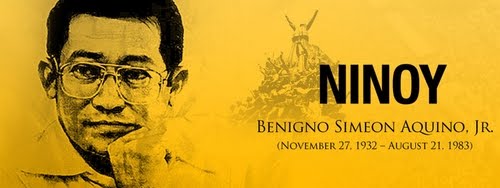
Leadership Profile: Benigno “Ninoy” Aquino, Jr.

“The Filipino is worth dying for.” Those were among the final words spoken by “the greatest president the Philippines never had,” Benigno “Ninoy” Aquino, Jr., including the night before he was assassinated on August 21, 1983.

There is no greater leadership impact than sacrificing for others. So far in this Leadership Profile series, we’ve looked at several thought leaders, a business leader and a football coach. They taught us how to think and to believe in ourselves. Today we’ll focus on a man who made the ultimate sacrifice on behalf of an entire nation.

Ninoy Aquino

5 Leadership Book Recommendations for the Summer

It’s May. Graduation season is upon us. The kids are close to getting out of school for the summer. Maybe you have your vacation all planned out. Regardless, nearly everyone has some collection of summer activities in mind.

Reading SummerI’ve posted about reading before. I’ve shared reading strategies, a comprehensive list of leadership books and inspirational quotes such as Charlie “Tremendous” Jones,’ “You’ll be the same person in a year as you are today except for the people you meet and the books you read.” Unfortunately, not everyone enjoys reading as much as I do. So for now, let me use a more subtle approach and simply recommend five leadership books. Whether you read one or five this summer, I’m positive each one will help take your leadership to the next level.

8 Critical Stages for Anyone Creating Change

It’s been said that the term “change management” is a misnomer because if you are trying to “manage” change, you’re already too far behind! Change must be led from the front. Because of that, when I first discovered John Kotter’s eight stage process for creating major change in a university textbook (and published in his international bestseller Leading Change), I knew I had stumbled onto something incredibly valuable.

Change

So how do you go about creating change in your organization? Change seems like it should be simple enough – until we experience resistence from people who want things to stay the same. What’s the solution?

12 Takeaways from Chick-fil-A Leadercast 2013

My favorite annual leadership event takes place each May. It’s Chick-fil-A Leadercast. The seminar features some of the biggest names in all of leadership. This year’s theme was: “Simply Lead.” I hope you got to attend, but if not, I’ve included 12 of my greatest takeaways. Here they are:

CFA Leadercast 2013