Leadership Profile: George Washington

It’s not possible to talk about leadership profiles without highlighting George Washington. There simply wouldn’t be a United States of America without him. Over two hundred years after being hailed the father of his country, Washington is still considered by many the most remarkable American to ever live.

The purpose of the Leadership Profile series isn’t to point out all the heroic accomplishments of each leader. There are plenty of history books for that. The purpose is to highlight key actions each leader took that all of us can emulate. Some leaders have heroic moments that thrust them into the spotlight. Many more simply do the next right thing over a long period of time.

As the first president of the United States, George Washington was a hero in every sense of the word. But he started where you and I start: with challenging situations in the moment. Let’s take a look at some of the things that set Washington up for success.

George Washington

What Does It Actually Mean to Be Generous?

How will you spend Thanksgiving this week? As an American holiday, it usually includes time with family and ridiculous amounts of food and football. Talk about a great combination!

As we prepare to celebrate the holiday, it’s important to note that thankfulness actually encompasses four different areas: gratitude, generosity, sharing and contentment. Last week, I mentioned how important it is to be generous, especially with so many people who need our help. Right now, it’s the survivors of Typhoon Haiyan in the Philippines. (If you haven’t made a donation yet, you can contribute to the Red Cross here). But there are many more.

I’d like to challenge you to be a generous person. Here’s how you can get started.

Generosity

It’s Time to Be Generous

On November 7, 2013, one of the most intense storms in recorded history Typhoon Haiyan struck the Philippines. Wind gusts were estimated at 195 mph. Early estimates suggest over 10,000 people have died in the city of Tacloban alone and more than 11 million citizens have been displaced. Aid workers continue to struggle against the debris to provide food and shelter before the survivors succumb to starvation, exposure or disease.

If there was ever a time to be generous, it’s now.

Residents walk near vehicles and debris floating on a river after Super Typhoon Haiyan devastated Tacloban city in central Philippines

How SMART Are Your Goals?

Zig Ziglar once said that “a goal properly set is halfway reached.” I don’t know about you, but I always figured if I could get a 50% head start in anything, I’d take it! Of course it can take a lot of effort to slug through the dog days of execution, especially if your goal is to run a marathon or something tough and long-term like that. But the greater battle is usually for clarity at the onset.

So how do you get clarity when it comes to goal-setting?

You’ve probably heard about SMART goals before. If you haven’t, this little model could change your life. If you have, it’ll be a good refresher. Here are the steps to transforming regular, ordinary goals into SMART goals.

Goals2

Powerful Question #11

Question Mark 2Sometimes when I meet with a leader of a team or a department, I’ll ask a question about priorities that usually raises an eyebrow or two. I don’t think it’s a coincidence that the ones who can answer it usually seem to be on top of things a lot more than the ones who draw a blank. Why don’t you give it a shot? Here it is:

What is your process for determining which projects get priority and which ones either get saved for later or dumped altogether?

Leadership Profile: Malala Yousafzai

One of the leadership questions I often hear is this: how can I be a leader when I’m so young?

I can’t think of a better example to share than this month’s leadership profile Malala Yousafzai.

Malala YousufzaiI first heard of Malala when it was reported the Taliban in Pakistan’s Swat Valley had attempted to assassinate the then 15 year-old girl on her way home from school, shooting her in the face at point blank range in October, 2012. Her only “crime” was standing up and speaking out for the education rights of girls in the region. After an amazing recovery in Birmingham, England, Malala slowly but surely redoubled her efforts to speak out on behalf of education equality. Her book I Am Malala was released one year after her assassination attempt and she was the youngest person ever to be nominated for a Nobel Peace Prize.

Malala’s media story has yet to peak, but I believe there are several takeaways from a leadership front as well, particularly for young leaders. Here they are:

The Day an Exec Showed Me Up

Several years ago when I was in graduate school, I invested a summer at a major restaurant franchise with the hopes of landing a corporate role after I graduated. I worked with an incredible operator who went out of his way to help me build my network with the corporate staff. Through one of the connections he shared, an area director agreed to stop by the restaurant to chat with me one Friday.

I still haven’t forgotten that day, but not for the reasons you might expect.

Businessmen Climbing

But What If I Can’t Delegate?

“I don’t like to micro manage,” my friend lamented. “But even when I set clear expectations and deadlines, I find myself having to guide the entire process or else the ball gets dropped. Is that an employee issue or a leadership issue?”

It’s hard enough to want to delegate in the first place. Many leaders lack trust, are insecure or are control freaks. But once you get past those barriers, what happens when your followers can’t pull their weight? Let’s talk about a few ways managers can guide their projects so that everyone can contribute.

People Consulting Plan

How Do You Diagnose an Organization?

You’ve just been assigned to fix a problem or design a solution for an organization, department or team. Maybe you’ve been brought in as a consultant or joined a cross-functional task force. Regardless, management wants results. Where do you start?

Just like in medicine, the last thing a change practitioner should do is prescribe before diagnosing. You don’t want to “fix” the wrong problem. That usually just makes things worse and hurts your credibility.

So how do you diagnose an organization?

Stethoscope Doctor1

Leadership Profile: Jack Welch

I first heard Jack Welch speak at the Leadercast Seminar in 2013. Even though he was over a decade into retirement and in his upper 70s, Welch’s rich enthusiasm for business and leadership took the audience (and the moderator) by storm. In raising General Electric’s value by over 4000% in his twenty years as CEO, Welch has to be considered one of the iconic American business men of the second half of the 20th century. What surprised me was how much fun he seemed to have in the process.

The greatest part of Welch’s contribution may be in the form of giving back – by sharing his knowledge of business and management with all sorts of audience and through various speaking engagements and books he’s written in his retirement. Here’s a snip-it of what I picked up.

Image by Joshua Zumbrun

Image by Joshua Zumbrun

Powerful Question #10

Question Mark 2If you’ve read this blog for long (or even if you haven’t), you’ve probably noticed there is an awful lot to think about when it comes to leadership. If you go to the bookstore or do an Internet search, the number of resources is pretty much endless.

With all that is available, have all the bases been covered?

What is one thing people often miss when it comes to leadership?

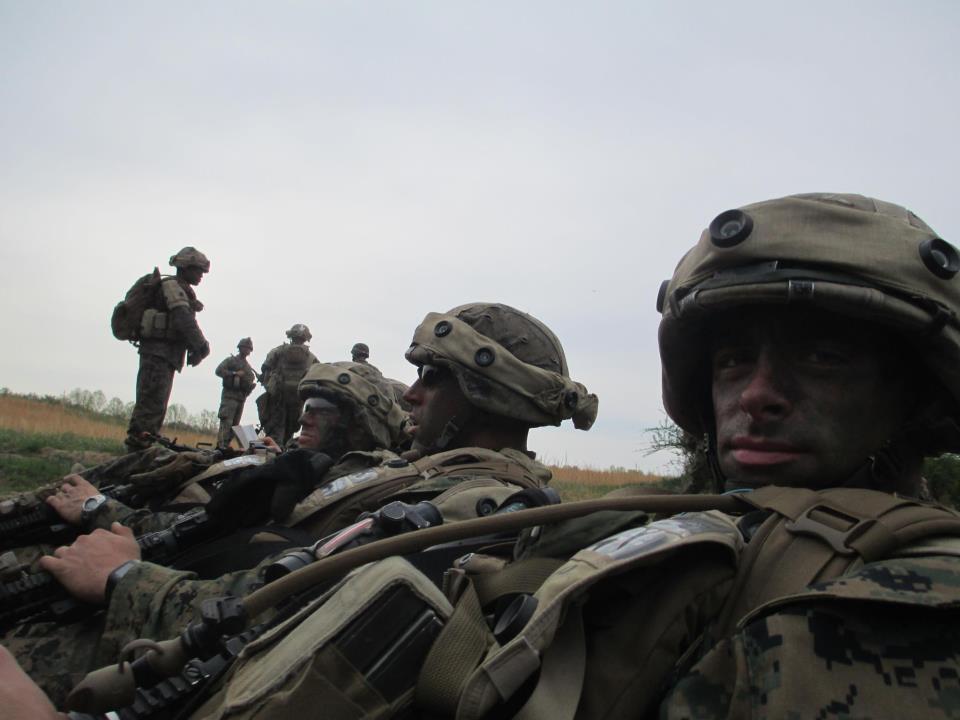
Love Your Neighbor: The Heart of Leadership in the Marine Corps

Today’s post was guest-written by my brother Lt. Cale Magnuson, a U.S. Marine   currently assigned to the Marines Aviation Program. You can connect with Cale on LinkedIn or Twitter. If you would like to be featured on this site, click here.

I distinctly remember the first time I ever heard Captain Tucker tell us that he loved us. Captain Tucker was the platoon commander charged with instilling in us the art and science of becoming Officers in the Marine Corps. As you might imagine, this raised some eyebrows. Captain Tucker is still to this day the hardest Marine I have ever met. As a Purple Heart recipient, he could have ordered us to follow him to hell and back, and none of us would have hesitated. So why would such a man openly tell a bunch of new Lieutenants that he loved us?

Marines Sitting