How to Build a Development Library for Your Organization

Files OrganizedIn my last post I wrote about Individual Development Plans and how you can use them to develop in a professional setting.  This week I’ll tell you how to build a development library for your organization.

What is a Development Library?

A development library is simply a collection of organizational suggested or sponsored developmental experiences that employees can choose from as they consider their own development plans.  When you go to an actual library, you browse the shelves until you find one (or several) book that meets your reading objective.  It’s the same principle with a development library.

How to Complete an Individual Development Plan

Perhaps you’ve heard of the professional growth tool called the Individual Development Plan (or IDP for short). They often prove handy for many organizations seeking to develop employees’ skills (leadership & functional) in preparation for what’s next. In some cases, entire sectors (such as the U.S. government) require the completion of IDPs on an annual or semi-annual basis. Other organizations have a more ad hoc system involving the use of IDPs.

IDP

So what makes the IDP so special? In this post I’ll explain what an IDP is, why it’s so important, and then share some steps showing how to complete one. At the bottom of the post I’ll include a link to an IDP template you can use for yourself or your team.

The Power of Believing the Best

Several years ago I had the pleasure of participating in a 16 week leadership coaching training course with the Center for Coaching Excellence (CCE). Since that time I’ve had the pleasure of coaching a number of of business owner or organizational leaders. I enjoyed the insight and techniques I was taught, but the most significant thing I came away with was the relational effectiveness of CCE’s core values for coaching. For anyone wanting to influence others, I think it represents the bottom line.

The value that stood out the most was “believing the best” about other people. Think about that one for a minute. What does believing the best actually mean? How often when we talk or relate with someone do we believe or assume the absolute best about the other person? What could happen if we did? What would it take to get there?

Six Reasons You Should Give Public Speeches

Public SpeakerOne of the ideas I really latched on to when I started taking leadership courses in graduate school was John Maxwell’s quote, “everything rises and falls on leadership.”  But I was also challenged by a response my leadership friends came up with, that leadership rises and falls on communication.  If they were right, then it didn’t matter what I learned about leadership if I couldn’t communicate it.  A quick self-assessment revealed that I could write, converse, and lead small group discussions, but I lacked training and experience speaking in front of groups.

Right then and there I promised myself I would become a better public speaker.

How to Establish Yourself as a Leadership Expert, Part 2

In my last post, I shared several reasons why you don’t have to wait until later to be a leadership expert. You can begin right here, right now, no matter who you are. If you’ve bought that idea, then let me share several practical ways you use your leadership expertise to benefit others.

Expert3

How to Establish Yourself as a Leadership Expert, Part 1

At a social function recently I found myself in an engaging conversation with a psychologist and a fitness coach. We took turns sharing the interesting nuances of our professions. After my turn explaining the exciting ways I get to be involved in leadership as a consultant, coach and writer, one of my new friends commented that leadership seemed to go hand-in-hand with both psychology and fitness. I asked what he meant. He clarified that commitment to developing a healthy body and a sound mind are some of the first traits necessary to lead both oneself and others. “But,” he added, “I’d feel awkward presenting myself as a leadership expert. Who am I to say I know what leadership is and that people should listen to me?”
Expert1

It was such a great question. Who are the real leadership experts anyway? Are they the people who manage Fortune 500 companies, hold elected positions, or write bestselling books? They certainly qualify, but are there others?

I’m convinced everyone can become not only a leader but an expert as well because we all have the ability to influence and to learn and grow. That means you! And it can happen much sooner than you think. What a great loss it would be for anyone to sidestep their leadership potential because they felt unqualified. So let me share my rationale with you. You can become a leadership expert from right where you are, starting today.


The Three Leadership Questions I Always Ask

QuestionsHow do you talk with other people about leadership?

Unless I’m already a trusted leadership advisor, most people don’t just come up and ask me to help them evaluate their personal and organizational leadership effectiveness. (And when they do, it’s a little more organic than that!)  It’s true the more responsibilities people acquire, the more complicated their leadership situation gets. Executive leaders usually have access to budget, resources and personnel to address the leadership challenges they face. Everyday leaders often have to figure things out on their own. You may be able to help, but how do you get the conversation started?

Three Ways to Become a Trusted Leadership Advisor

Earlier this week, I had the privilege of guest posting on my friend Dan Black’s blog Dan Black on Leadership.  Dan has been writing on leadership and personal development for several years now and has built a pretty impressive readership.

Dan Black

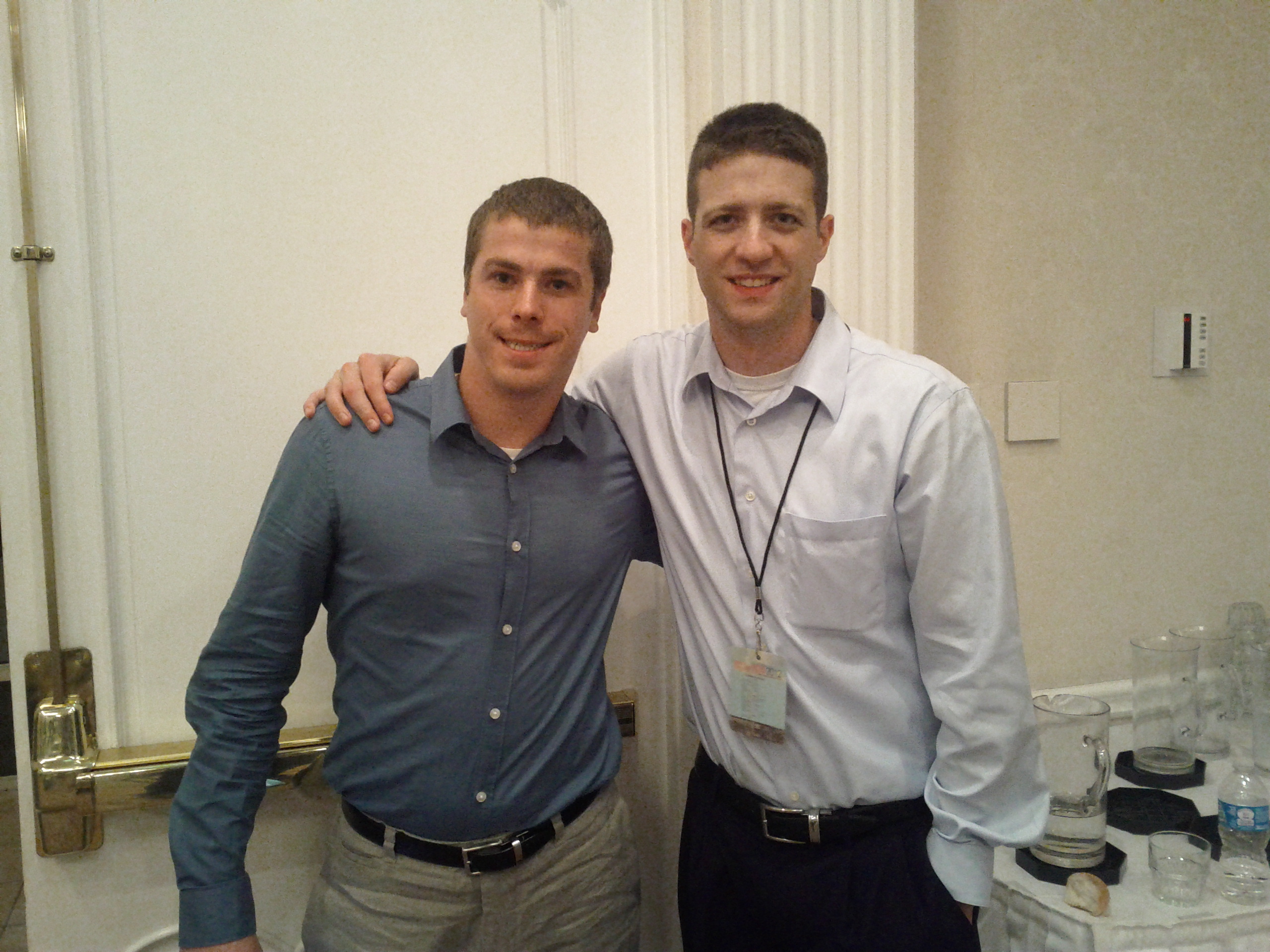
I got to meet Dan Black at a conference in San Diego

Has anyone ever asked you how to become a better leader?  I still remember the first time that happened to me.  I wasn’t prepared to answer, but at the same time, I was the one being asked.

The Courage to Lead

The more time I spend with military and national security leaders, the more I’m convinced of the magnitude of a certain leadership quality: courage. That might not surprise you; everyone knows military service members need courage to put their lives on the line every day. There’s no debating that, but the courage I’m talking about applies to all leaders everywhere, whether your organization is made up of hundreds of thousands of people, or just a handful. Let me explain.

Courage

Reconciling Humility and Leadership

The humble leader is in vogue. Jim Collin’s masterpiece Good to Great made that clear with his distinction of “Level 5 Leadership,” as has a resurgence in servant leadership interest.

But if you are a naturally non-assuming person, you can’t use the guise of “humility” to keep from putting your best foot forward.Humility

Core Values as Habits

It was years ago that the late Green Bay Packers football coach echoed these words as part of his famous “What It Takes to be Number One” speech:

Lombardi“Winning is not a sometime thing; it’s an all the time thing. You don’t win once in a while; you don’t do things right once in a while; you do them right all the time. Winning is a habit.  Unfortunately, so is losing.”

Reverend Lombardi (as my high school football coach referred to him) knew something about winning – that it was habitual.  But I believe he can teach us something about alignment when it comes to our core values as well.

How to Choose Which Leadership Book to Read Next

Huge Stack of BooksIn my previous posts, I explained why reading is crucial to growth and development and listed my favorite leadership books – the ones that inspire me or provided the most insight.  But choosing the right book to read next can be tricky sometimes, especially given there are literally hundreds of thousands just a click away.  With so many choices and so little time to read, how can you be sure you are picking the “right” one?

Here are a few strategies I’ve had a lot of success with: